
Soccer Skills Training: Building Confidence and Ability on the Pitch
Soccer skills training helps players become more confident, composed and effective in every area of the game. Whether you are new to football or looking to improve your performance, regular practice can strengthen your technique, decision-making and understanding of the game.
Good training is about more than repeating tricks. It develops the fundamental skills players use in matches: controlling the ball, passing accurately, dribbling under pressure, shooting with purpose and working effectively with teammates.
Master the basics
A strong foundation makes more advanced skills easier to learn. Players should practise receiving the ball with different parts of the foot, keeping it close while moving, and passing accurately over short and longer distances. Repetition helps build consistency, while practising with both feet gives players more options during a match.
Small-sided games and simple drills can make technical practice enjoyable. For example, players can pass in pairs while moving, or try to keep possession in a small area. These activities encourage quick touches and help players become comfortable on the ball.
Improve dribbling and ball control
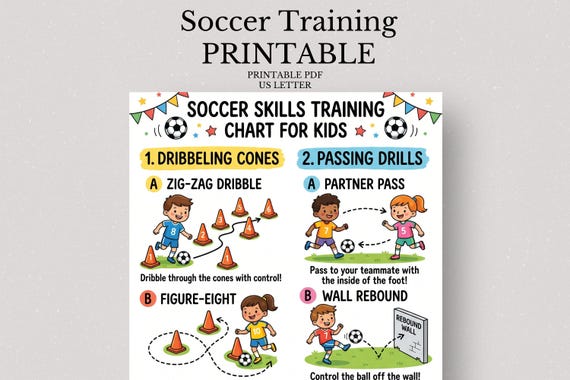
Dribbling is most effective when it has a purpose. Players can practise changing direction, adjusting their speed and keeping the ball within playing distance. Cones can provide a useful course, but training should also include exercises with opponents or teammates so players learn to react to pressure.
Good ball control means being ready for the next action. When receiving a pass, players should try to look up before the ball arrives and take their first touch into space where possible. This can give them more time to pass, dribble or shoot.
Practise passing and shooting
Accurate passing depends on technique, awareness and communication. Players should practise using the inside of the foot for controlled passes, as well as learning to vary the weight and direction of the ball. Looking around before receiving helps players spot teammates and make decisions sooner.
Shooting practice can include strikes from different angles and distances. Rather than focusing only on power, players should work on balance, accuracy and choosing the right moment to shoot. Repeating these skills in realistic situations helps make them more useful during matches.
Develop movement and decision-making
Football is not only about what a player does with the ball. Moving into space, offering a passing option and supporting teammates are all important skills. Training games can help players learn when to pass, dribble or hold their position, while encouraging them to communicate and work together.
Players should also practise defending. Staying balanced, watching the ball and opponent, and choosing the right moment to challenge can help prevent mistakes. Defending is a team responsibility, so awareness and organisation matter as much as individual technique.
Make training effective
- Set a clear goal for each session, such as improving first touch or passing accuracy.
- Practise regularly, while allowing time for rest and recovery.
- Use both feet and try skills on each side of the pitch.
- Include match-like exercises that involve decisions, movement and pressure.
- Warm up before training and cool down afterwards.
- Ask a coach or trusted teammate for constructive feedback.
Progress takes time, and mistakes are a normal part of learning. Focused practice, patience and a positive attitude can help players improve steadily. By combining technical drills with teamwork and game-based activities, soccer skills training can help footballers enjoy the game and perform with greater confidence.
Enhancing Football Prowess: The 8 Key Benefits of Soccer Skills Training
- Improves ball control.
- Builds passing accuracy.
- Develops confident dribbling.
- Sharpens shooting technique.
- Encourages better decision-making.
- Boosts fitness and agility.
- Strengthens teamwork and communication.
- Builds confidence on the pitch.
Challenges of Soccer Skills Training: Fatigue, Monotony, Costs, and Injury Risks
- Can be tiring and time-consuming.
- Repetitive drills may feel dull.
- Coaching can be expensive.
- Too much training can increase injury risk.
Improves ball control.
Soccer skills training improves ball control by helping players become more comfortable receiving, moving and protecting the ball. Regular practice develops a softer first touch, sharper footwork and greater confidence using both feet. As a result, players can keep possession under pressure, move into space and make their next pass or shot more effectively.
Builds passing accuracy.
Soccer skills training helps players build passing accuracy through regular practice with different distances, angles and types of pass. By refining their technique and learning to judge the right pace and direction, players can find teammates more reliably and keep possession under pressure. Accurate passing also makes it easier for a team to create chances and move the ball confidently around the pitch.
Develops confident dribbling.
Soccer skills training helps players develop confident dribbling by giving them regular practice controlling the ball, changing direction and moving at different speeds. As they learn to keep the ball close and use both feet, they become more comfortable taking on opponents and making decisions under pressure. This confidence can help players retain possession, create space and support their team during a match.
Sharpens shooting technique.
Soccer skills training sharpens shooting technique by helping players improve their balance, foot placement, timing and accuracy. Repeated practice from different angles and distances builds confidence and teaches players to strike the ball with control, choose the right type of shot and stay composed in front of goal.
Encourages better decision-making.
Soccer skills training encourages better decision-making by helping players recognise options and respond quickly to changing situations. Through drills and small-sided games, players learn when to pass, dribble, shoot or move into space, while becoming more aware of teammates and opponents. With regular practice, they can make thoughtful choices under pressure and contribute more confidently to the team.
Boosts fitness and agility.
Soccer skills training can boost fitness and agility by keeping players active through running, turning, changing direction and reacting quickly. Regular practice helps build stamina, speed, balance and coordination, while ball-based drills make exercise engaging and closely connected to the demands of a match. As players become fitter and more agile, they can move around the pitch with greater confidence and respond more effectively during play.
Strengthens teamwork and communication.
Soccer skills training helps players develop teamwork and communication by encouraging them to work together towards a shared goal. Passing drills and small-sided games teach players to support one another, find space and make decisions as a team. Calling for the ball, sharing information and listening to teammates can build trust and understanding, helping the whole squad perform more effectively on the pitch.
Builds confidence on the pitch.
Soccer skills training helps players build confidence by giving them regular opportunities to practise and improve. As their control, passing and decision-making become more reliable, they are more likely to trust their abilities during a match, stay composed under pressure and take an active part in the game. Small successes in training can also encourage players to try new skills and keep developing.
Can be tiring and time-consuming.
Soccer skills training can be tiring and time-consuming, particularly when sessions are frequent or involve demanding drills. Balancing practice with school, work, family life and rest can be challenging, and too little recovery may leave players feeling fatigued. A realistic training schedule, with enough time to rest, can help players improve while keeping football enjoyable.
Repetitive drills may feel dull.
Repetitive drills can feel dull, especially when players spend long periods practising the same movement without variety or a clear challenge. This may reduce motivation and make it harder to stay focused. Coaches can keep sessions engaging by mixing up activities, adding small-sided games and setting achievable goals, while still giving players the repetition they need to improve.
Coaching can be expensive.
One drawback of soccer skills training is that coaching can be expensive. Fees for regular sessions, specialist programmes or one-to-one coaching may add up, and extra costs such as travel and equipment can make participation harder for some families. Community clubs and group sessions may offer more affordable ways to develop skills.
Too much training can increase injury risk.
Too much soccer skills training, especially without enough rest and recovery, can increase the risk of injuries such as muscle strains, sprains and overuse problems. Repeating intense drills or playing through pain can place excessive strain on a developing body. A balanced training schedule, proper warm-ups, rest days and attention to early signs of discomfort can help players improve while reducing the chance of injury.
Tags: ball control, both feet, decision-making, defending, dribbling, first touch, football training, footwork, match practice, movement, passing accuracy, performance improvement, player confidence, possession, receiving the ball, shooting, soccer skills training, teamwork, technical skills, training drills